About Butterfly Valve
A butterfly valve is a quarter-turn valve that uses a disc to control the flow of fluid. The disc is attached to a rod that is connected to an actuator. When the actuator is turned, the disc rotates 90 degrees. In the closed position, the disc blocks the flow of fluid. In the open position, the disc is perpendicular to the flow of fluid, allowing it to pass through the valve. These are the most simple and versatile steam boiler valves. These are also quarter-turn operated valves. quarter turn operation ensures quick operation of the valves.in opening condition, there is a minimum hindrance to the flowing fluid through the valves. This results in very less pressure drop across the valve.Due to its unique mode of operation, the valve can be actuated easily without requiring wear and tear. its advantage is its compact size which makes its installation process easy.
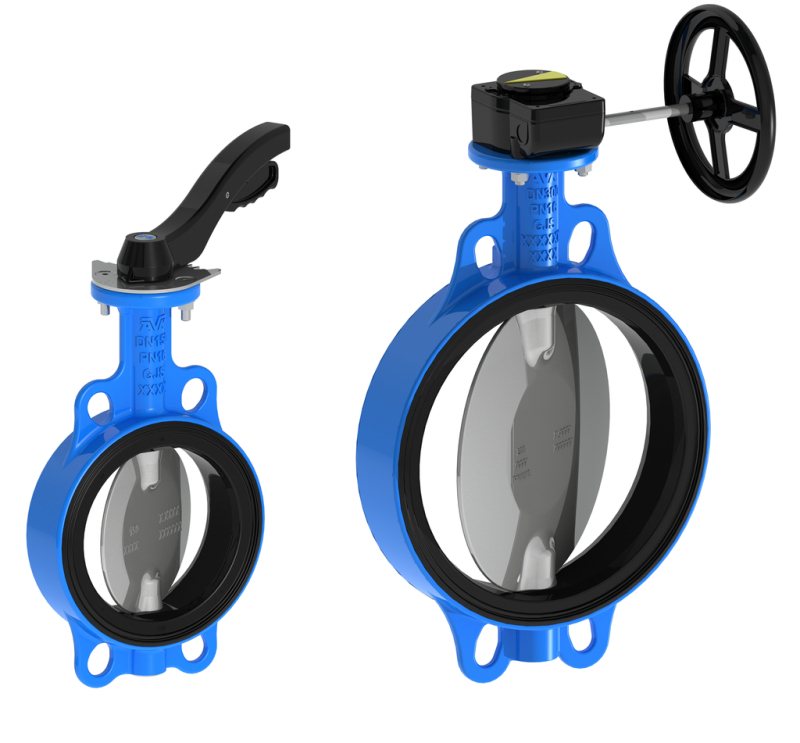
Versatile Construction for Multiple ApplicationsWith material choices including cast iron, ductile iron, and stainless steel, this butterfly valve is built to accommodate demanding environments in chemical processing, HVAC, and water supply. Its robust design, coupled with EPDM, PTFE, or NBR sealing options, maximizes compatibility for a variety of media such as water, oil, and gas.
Effortless Installation and OperationFeaturing an ISO 5211 mounting pad and wafer-type connection, installation is quick and straightforward. Manual operation is facilitated by a lever or gear box, both engineered for low torque and lightweight handling. The powder-coated handle also ensures long-lasting durability against corrosion.
Reliable Performance to International StandardsDesigned and tested to ISO, DIN, BS, and API standards, this butterfly valve maintains a maximum working pressure of 16 Bar and test pressures up to 24 Bar (shell) and 17.6 Bar (seat). With a temperature range from -20C to 120C, it's trusted for safety and durability in industrial settings.
FAQ's of Butterfly Valve:
Q: How is the butterfly valve installed and operated?
A: Installation is made easy with the ISO 5211 mounting pad and wafer connection design, allowing compatibility with standard industry mounting and flange setups. The valve can be manually operated using either a lever or a gear box, depending on the application requirements and size.
Q: What are the benefits of the epoxy powder coating on this butterfly valve?
A: The epoxy powder coating provides superior corrosion resistance, protecting the valve from harsh environmental conditions and extending its operational lifespan, especially in water, oil, and gas applications.
Q: When should I choose EPDM, PTFE, or NBR for the seat material?
A: EPDM seats are best for water and mild chemical services, PTFE is ideal for aggressive chemicals or higher temperatures, while NBR is suitable for oil, gas, and hydrocarbon media. Select the appropriate seat material based on your specific application and media compatibility.
Q: Where can this butterfly valve be applied?
A: This valve is suitable for use in water treatment plants, fire fighting systems, irrigation setups, oil and gas pipelines, power plants, industrial water supply, chemical processing, and HVAC systems, making it versatile for various industrial sectors.
Q: What is the process for pressure testing the valve before use?
A: Each valve undergoes a shell test at 24 Bar and a seat test at 17.6 Bar to ensure integrity and leak-free performance. The rigorous testing process aligns with ISO, DIN, BS, and API standards for reliable operation in the field.
Q: What sizes and pressure ratings are available for this butterfly valve?
A: The valve is available in port sizes ranging from DN50 to DN600 (2" to 24") and supports pressure classes PN10 and PN16. This range covers a wide spectrum of flow and pressure demands in industrial applications.
Q: How does the design contribute to ease of maintenance and low operational torque?
A: Its lightweight wafer structure, optimized disc profile, and precision sealing reduce the torque needed for operation, simplifying both handling and maintenance. This lowers operating costs and minimizes downtime during servicing.






 Send Inquiry


 Send Inquiry