About Actuator valves
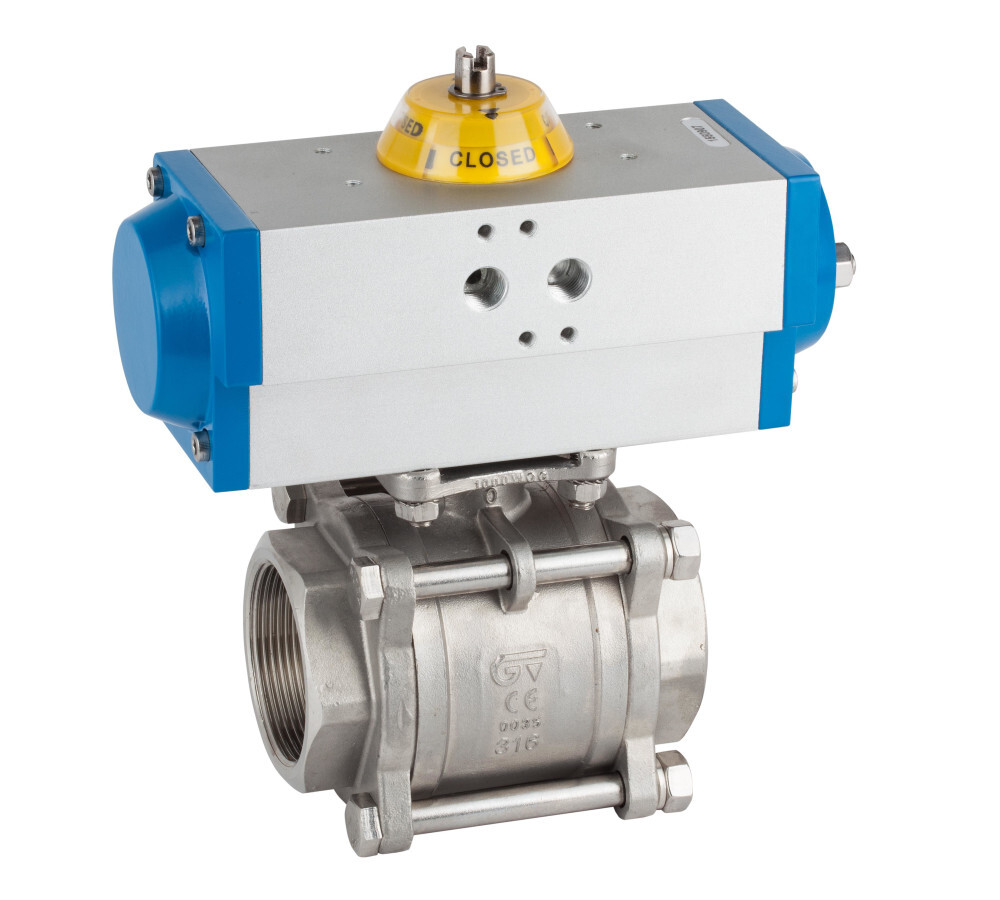
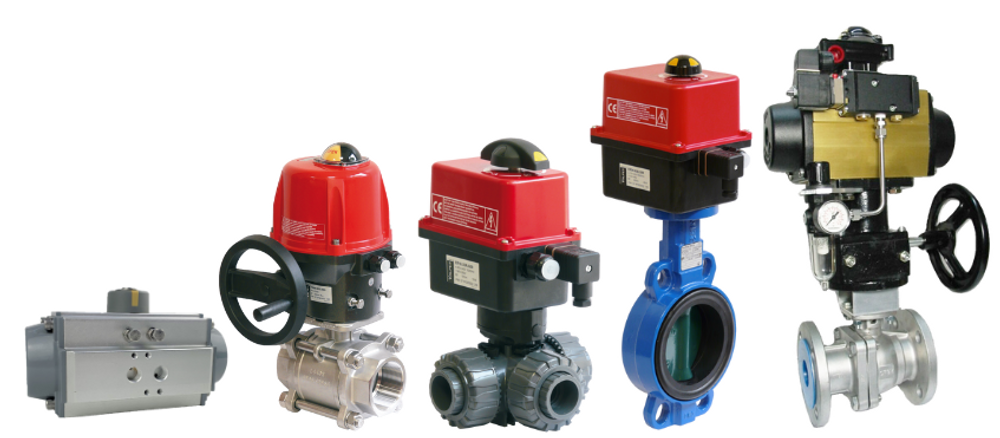
A valve actuator is the mechanism for opening and closing a valve. Manually operated valves require someone in attendance to adjust them using a direct or geared mechanism attached to the valve stem. Power-operated actuators, using gas pressure, hydraulic pressure or electricity, allow a valve to be adjusted remotely, or allow rapid operation of large valves. Power-operated valve actuators may be the final elements of an automatic control loop which automatically regulates some flow, level or other process. Actuators may be only to open and close the valve, or may allow intermediate positioning; some valve actuators include switches or other ways to remotely indicate the position of the valve.
Used for the automation of industrial valves, actuators can be found in all kinds of process plants. They are used in waste water treatment plants, power plants, refineries, mining and nuclear processes, food factories, and pipelines. Valve actuators play a major part in automating process control. The valves to be automated vary both in design and dimension. The diameters of the valves range from one-tenth of an inch to several feet.
Reliable Performance Across ApplicationsEngineered for diverse environments, these actuator valves demonstrate exceptional resilience in industries such as water treatment, chemical processing, and fluid regulation. Their broad temperature tolerance (-20C to 180C) and high ingress protection maintain functionality in demanding conditions. Low torque actuation and manual override capability offer additional flexibility for maintenance and emergency operation.
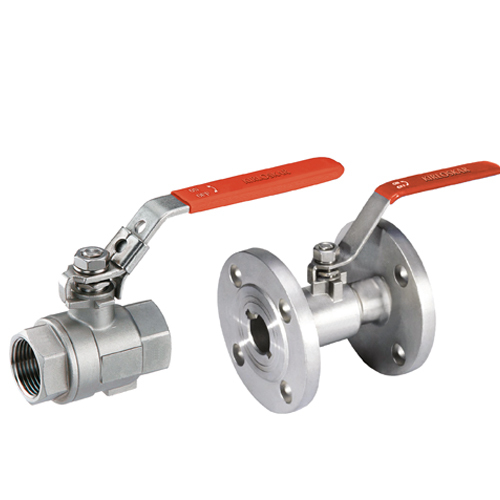
Flexible Mounting and Connection OptionsFitted with an ISO 5211 direct mount top flange, these valves simplify installation on various automated systems. Options like flanged, wafer, and threaded connections, as well as manual, electric, or pneumatic control, provide extensive adaptability. Multiple pin connection options (2/3/5 pin) and a choice of sealing materials accommodate a vast range of fluid media and installation requirements.
FAQ's of Actuator valves:
Q: How is the operating time of these actuator valves advantageous for industrial applications?
A: With a rapid operating time ranging from 2 to 10 seconds for full open or close, these valves ensure swift response in process control, minimizing downtime and enhancing system efficiency in industrial automation environments.
Q: What ingress protection level do the actuator valves offer?
A: These valves are available with IP65 or IP67-rated weatherproof housings, providing resistance against water and dust ingress, making them suitable for challenging indoor and outdoor industrial environments.
Q: When should I use the manual override option on the actuator valve?
A: The manual override feature is ideal during power loss, emergency scenarios, or maintenance, enabling operators to manually control valve position to maintain or restore process flow without the need for actuation power.
Q: Where can these actuator valves be installed considering temperature and media?
A: These valves are suitable for installation in environments with ambient temperatures from -10C to +60C and can handle fluid temperatures between -20C to 180C. Compatible media include water, air, steam, oil, and a range of chemicals.
Q: What control signals are supported for automated systems?
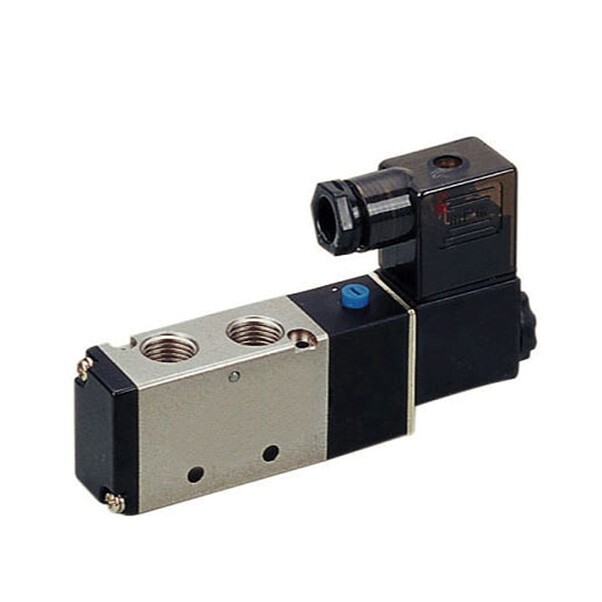
A: These actuator valves support various control signals, including analog (4-20mA, 0-10V) for modulating control and digital On/Off for straightforward automation, ensuring seamless integration with modern control systems.
Q: How does the epoxy powder coating benefit valve longevity?
A: The epoxy powder-coated finish serves as a durable shield against corrosion, extending the valve's service life even in aggressive industrial or outdoor environments, thus reducing maintenance frequency and costs.
Q: What is the process for mounting and wiring actuator valves?
A: Thanks to the ISO 5211 direct mount design, installation is straightforward. Wiring options accommodate 2, 3, or 5 pin connections, with clear visual indicators for valve position, and optional limit switches for precise open/close feedback.






 Send Inquiry


 Send Inquiry