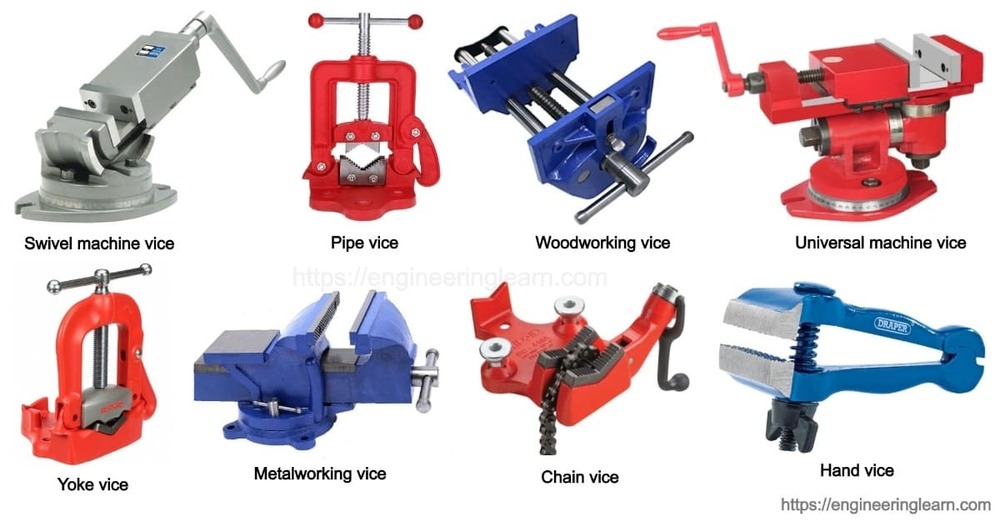
About Industrial Vices
Machine Vices: These are designed for use with machines like milling machines and drilling machines.
Precision Clamping and Swivel FlexibilityThe bench vice delivers remarkable versatility with a jaw width of 100 mm and opening of up to 150 mm. Its swivel base offers adaptable placement for intricate tasks, making it an essential tool for metalworking, woodwork, and repair operations. Durable construction ensures lasting and dependable results.
Designed for Industrial DurabilityMade from corrosion-resistant metal, each vice is built to withstand harsh industrial environments. Pre-drilled mounting holes simplify the installation process while heavy-duty steel threads contribute to secure and stable performance. Replaceable jaws and a steel handle further enhance the products longevity and practicality.
FAQs of Industrial Vices:
Q: How is the industrial bench vice installed in a workshop setting?
A: Installation is straightforward due to pre-drilled mounting holes on the base. Secure the vice to a stable bench surface with compatible bolts, ensuring the swivel base and clamping components are properly aligned for smooth operation.
Q: What are the main benefits of using a 100 mm jaw width bench vice with high clamping force?
A: The 100 mm jaw width offers versatility for holding a wide range of workpieces securely, while the high clamping force minimizes slippage and maximizes safety during heavy-duty applications, especially in industrial environments.
Q: When should the replaceable jaws be changed on this bench vice?
A: Replaceable jaws should be changed when significant wear, deformation, or reduced gripping performance is observed. Timely replacement maintains effective clamping and prolongs the life of the vice.
Q: Where can industrial bench vices with these specifications be sourced in India?
A: Suppliers and traders across major industrial hubs in India offer these bench vices. They can be sourced from specialized tool dealers and online industrial equipment platforms catering to professional workshops.
Q: What process is involved in operating the manual bench vice safely?
A: To operate safely, position the workpiece between the jaws, use the steel handle to tighten until the piece is firmly held, and utilize the swivel base for optimal orientation. Always ensure that the mounting is secure and avoid exceeding the maximum jaw opening.
Q: How does corrosion resistance enhance the longevity of this bench vice?
A: Corrosion resistance protects the vice from rust and chemical exposure, especially in humid or harsh industrial settings. This feature preserves the structural integrity and functional performance of the tool over time.
Q: What types of industrial tasks are best suited for this bench vice?
A: It is ideal for metal fabrication, assembly work, woodworking, and repair operations where secure and stable clamping is crucial. Its robust features accommodate both precision and heavy-duty workloads.






 Send Inquiry


 Send Inquiry